Vorarlberg
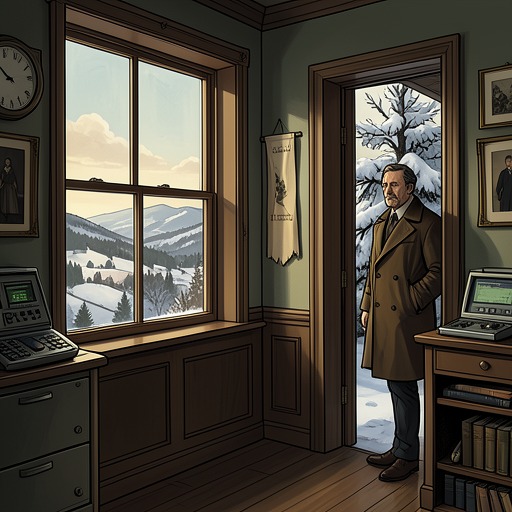
A Moveable FeastVorarlberg was the Austrian region where Ernest Hemingway, Hadley, and Bumby spent successive winters in Schruns, a sunny market town at the entrance to a valley of farms, forests, and high alpine routes. For the family, it was at once an economical home, a place to learn and practice mountain skiing, and a landscape that demanded effort before granting its most exhilarating descents. Hemingway also remembered Schruns as a place of concentrated work: during the winter of 1925–26, he reshaped the first draft of The Sun Also Rises there into a novel. The family eventually left the region and never returned, giving the remembered winters a boundary between an earlier happiness and the changes that followed.
Setting and Arrival
The family reached Schruns by train after crossing Switzerland and entering Austria at Feldkirch. The railway passed through Liechtenstein to Bludenz, where a small branch line followed a pebbly trout river through a valley of farms and forest. Schruns itself was a sunny market town with sawmills, stores, inns, and the year-round Hotel Taube, where the family lived. The journey from the rail line into the valley made the town feel connected to ordinary travel, while its surrounding mountains opened onto a more demanding world of trails and alpine huts.
The hotel’s large rooms had big stoves, windows, and beds with good blankets and feather coverlets. Meals were simple and excellent, and both the dining room and the wood-planked public bar were well heated. The valley’s open shape brought in plenty of sun. The family’s pension cost about two dollars a day for all three; as the Austrian schilling declined over time, their room and meals became less expensive. Hemingway distinguished this gradual fall in the currency from the desperate inflation and poverty he had seen in Germany. In Schruns, even a life lived economically could be comfortable and sociable.
A Mountain Life Built by Climbing
There were no ski lifts or funiculars from Schruns. Logging and cattle trails led up the different mountain valleys, and skiers climbed on seal skins attached to the bottoms of their skis. High above, Alpine Club huts built for summer climbers provided shelter; travelers could use wood and leave payment, or carry supplies themselves. For longer tours among the high mountains and glaciers, they might hire someone to pack wood and provisions to a base. The best-known high huts included the Lindauer-Hütte, the Madlener-Haus, and the Wiesbadener-Hütte.
Hemingway and Hadley had loved skiing since first trying it together in Switzerland and later at Cortina d’Ampezzo. When Hadley was pregnant with Bumby, a doctor in Milan allowed her to continue skiing on the condition that she not fall. She chose terrain and runs carefully and kept her skiing controlled; Hemingway remembered her as strong-legged and skilled, and said that she did not fall. The family knew the different snow conditions, including how to travel in deep powder.
They generally arrived around Thanksgiving and stayed until nearly Easter. Schruns was not high enough to guarantee resort skiing except in winters of heavy snow, but the climbing was part of the pleasure rather than a barrier to it. The ascent to the Madlener-Haus was steep and difficult at first; repeated climbs made it easier, until the family could manage the route with twice the weight carried on their first attempt. The practice embodied the local discipline: the way down had to be earned by climbing up, often with a loaded rucksack.
Walther Lent, a pioneer high-mountain skier who had once partnered with Hannes Schneider, was starting an Alpine skiing school, and Hadley and Hemingway enrolled. Lent moved his pupils off the practice slopes and into mountain trips as soon as possible. He wanted them to reach untracked snow and travel between high Alpine Club huts over passes and glaciers. He insisted that a ski binding should release in a fall before a skier’s leg was broken. Unroped glacier skiing, which Lent particularly loved, had to wait until spring, when snow sufficiently covered the crevasses.
That winter landscape required judgment as well as strength. Wind made snow in different forms, each with its own dangers on skis; blizzards around the high huts could make familiar country strange enough that the route had to be chosen as if the travelers had never seen it. In spring, after long climbs with heavy packs, came the long glacier run: a straight descent through crisp powder, with the skiers crouched low and leaning into their speed. Hemingway presented that run not as a purchasable excursion but as the culmination of work accumulated over the winter.
Family, Work, and Everyday Life
Schruns suited Bumby, who was taken into the sun in a sleigh by a young woman who cared for him. Hadley and Hemingway, meanwhile, learned the surrounding country and visited its villages among people they found friendly. The family’s life joined care for a small child to strenuous days in the mountains; the town and valley offered a setting in which both could be part of the same winter routine.
The details of that routine extended beyond skiing. Hemingway remembered the warmth of the hotel room after the maid closed the windows and lit the porcelain stove, and breakfasts of fresh bread or toast, fruit preserves, coffee, eggs, and ham. A dog named Schnautz slept at the foot of the bed, accompanied the ski trips, and rode on Hemingway’s back or shoulder during downhill runs. He was also Bumby’s friend, walking beside the child and his nurse when they went out with the sleigh.
The family had books that Sylvia Beach had lent them for the winter, and they could bowl with townspeople in the alley beside the hotel’s summer garden. Once or twice a week, a poker game took place in the hotel dining room with the windows shuttered and the door locked, since gambling was forbidden in Austria. Hemingway played with the hotel keeper, Herr Nels, Walther Lent, a banker, the public prosecutor, and the captain of the Gendarmerie. When the captain heard the two gendarmes making their rounds outside, he raised a finger to his ear; the players fell silent until they had passed. The episode brings the close-knit town indoors, where sociability depended on a small, shared accommodation with the law.
Beyond the town, trails climbed through orchards and hillside farms. Hemingway remembered warm farmhouses, large stoves, and tall stacks of wood in the snow. Women carded and spun natural grey or black wool in their kitchens; Hadley knitted from the undyed yarn, whose retained wool fat kept caps, sweaters, and long scarves from becoming wet in the snow. Such practical details belong to the same alpine life as the climbs: clothing, warmth, food, and shelter were not incidental to movement through the mountains but helped make it possible.
Work and the End of the Winters
Schruns was also where Hemingway undertook the most difficult rewriting of his career. In the winter of 1925–26, he took the first draft of The Sun Also Rises, written in a six-week sprint, and reworked it into a novel. He could not remember which stories he wrote in Schruns, though he recalled that several turned out well. The town’s seasonal routine and demanding outdoor life thus accompanied sustained literary labor rather than standing apart from it.
The family’s presence in the region eventually became less secure. Hemingway had to go to New York to rearrange publishers, and on his return to Paris he did not catch the first, second, or third train that would have taken him back to Austria. The woman he was in love with was in Paris. When he eventually saw Hadley and Bumby again at the station, he remembered wishing he had died before loving anyone but Hadley. Yet after they were together in the mountains, he described a period in which he loved her, worked well, and believed that they had become invulnerable again. That happiness lasted while they were alone; after they left the mountains in late spring and returned to Paris, the other relationship began again.
Hemingway called the winter of the avalanches happy and innocent in comparison with the following winter, which he remembered as a nightmare disguised as fun, and the murderous summer that followed. It was in that later year that the rich arrived. The contrast does not erase the earlier winters’ material difficulty or physical demands; it makes their remembered contentment more sharply bounded. The family never returned to Vorarlberg, and neither did the rich. Schruns therefore remains in the narrative as more than a scenic retreat: its repeated seasonal life holds together family, labor, and strenuous pleasure, while its final departure marks the end of the first part of Hemingway’s remembered Paris years.